AA
No, woke is not just good behavior
Why woke is less about justice and more about power.
SamfunnLesestudio
Din lesevisning
I denne teksten
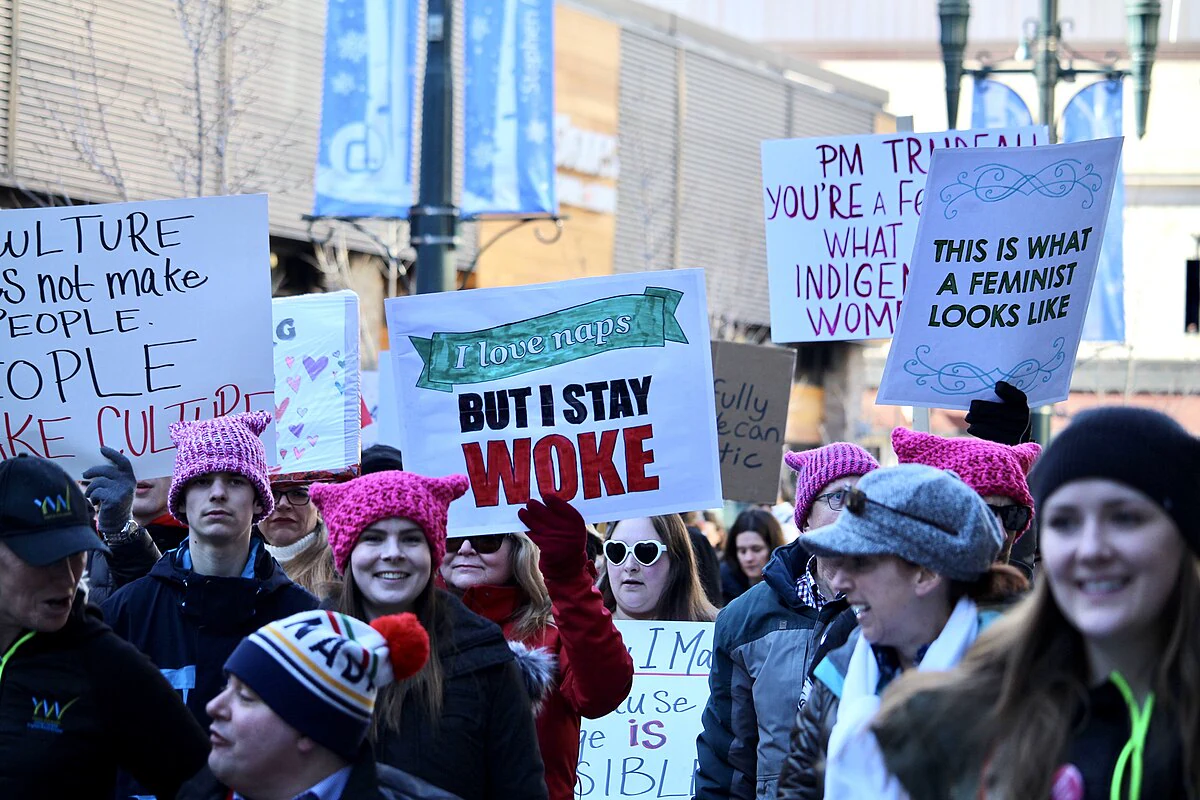
The woke movement presents itself as an innocent movement for justice and inclusion. “Just good behavior,” they say. “Just empathy and respect.” It sounds harmless enough. Who could be against kindness? But it is precisely this harmless façade that makes woke so effective – because it makes criticism seem unreasonable. Yet we see a steadily growing resistance. People notice that woke is about more than kindness. That woke is not primarily a moral philosophy, but a system of sanctions.
For if woke were really only about respect, why then do we see so much fear, canceling, and abuse of power? Why is woke ideology used so effectively to punish deviants? Why is there more focus on finding scapegoats than on actually improving society?
Because woke is not about making people better. It is about creating a hierarchy – a new form of power structure based on pure social control.
From empathy to instrument of power
Woke began as an idea to raise awareness of social injustice, but it quickly developed into a tool for the most manipulative people in society. What once was a call for reflection turned into a rigid set of rules. Rules that are not primarily about improving people’s behavior, but about placing individuals in an eternal power struggle. Those who understand the codes gain power. Those who stumble are punished.
But here is the interesting part: the most zealous guardians of woke morality are rarely the most moral people.
On the contrary, woke culture gives power to precisely those types of people who would previously have been marginalized in a healthy society: the authoritarian, the narcissistic, the conflict-seeking. Those who have always longed for a method to dominate others, but who previously lacked the right tools. Now they have them.
Look at woke environments in practice: are they filled with people who calmly and balancedly want a better world? No. They are dominated by those who shout the loudest, get the most worked up, demand the most “accountability,” and have an irresistible need to find fault in others. Those who can attack others without consequences – and who are socially rewarded for it.
Here we see the great shift: woke is no longer about *what* is true or just. It is about *who* gets to define what is true and just.
Virtue signaling: a competitive sport
Woke is not a fixed moral system with clear principles. It is a dynamic competition arena where the goal is to outdo each other in virtue. The more morally you appear, the greater the social reward.
But here lies the problem: when you compete in morality, it is not enough just to be good – you also have to find someone to condemn.
Woke activists love to expose something. An unfortunate joke. A tweet from 2012. An old movie that has “not aged well.” The more they can point to, the more virtuous they appear themselves. This is not about justice. It is about positioning.
And this creates a culture where everyone has to walk on eggshells. Where people censor themselves. Where no one dares to say what they really think, because they know that the smallest mistake can cost them their job, friends, and economic security.
That is why woke environments often have the most fear-driven people. No one knows when they themselves will be the next victim of cancel culture. No one knows when a slip of the tongue can cost them everything.
They know only one thing: it is safest to hunt together with the pack.
Woke rewards bad people
Who has the most to gain in a society where everyone must walk on eggshells? Not the friendly, not the calm, not those who actually want to build something positive. No, it is the authoritarian, the conflict-seeking, those who love power over others.
Woke gives them perfect tools:
- They can attack people without risk, because they do it “in the name of good.”
- They can rule through fear, because everyone knows what happens if you contradict them.
- They can manipulate by claiming that any deviation from their ideology is “hate.”
Here we see parallels to earlier ideological movements that used morality as a pretext for power. Nazism was a classic example of how a movement that originally presented itself as *just* (resisting “exploitation,” defending “the people”) quickly became an excuse for violence, exclusion, and abuse of power.
It is also here that we see woke’s similarities with other totalitarian ideologies. They all share the fact that they use a *moral necessity* to justify what they do.
- The Nazis used “protection of the people” as an excuse to expel Jews and dissidents.
- The communists used “justice for the workers” as a reason to eradicate class enemies.
- The woke movement uses “inclusion” as a justification to cancel, remove, and silence opponents.
All three have the same basic principle: they use morality as a weapon to control society.
The hidden brutality
Those who shout the loudest about wanting to “save marginalized groups” are often the ones who end up destroying the most lives. People who are canceled lose jobs, friends, economic security. They are publicly shamed. They are branded as morally inferior human beings.
And here is the irony: woke activists see themselves as the good ones. They see themselves as the kind ones. But what is actually kind about freezing out a colleague because he used the wrong pronoun? What is empathetic about shaming a 70-year-old on Twitter because he does not understand the latest in intersectional theory?
The truth is: woke activists are often among the most merciless people to be found.
The hidden brutality in woke environments is not an accident, but a necessity. The sanction systems that keep people in line are not side effects – they are the foundation of the movement’s power. Without fear, without consequences for missteps, woke would lose its ability to punish, exclude, and control. This is not a social movement seeking justice – it is a power apparatus disguised as a moral project.
To understand this, we must look at woke in light of earlier ideological power systems. For example: totalitarian regimes, from the Third Reich to the Soviet Union, did not operate only with violence, but with social disciplining. Ideological purity was never a fixed goal – it was a moving target, and precisely for that reason it was effective. Woke works in the same way: there is no limit to what counts as “good behavior,” because stricter demands can always be made. This creates a constant culture of fear where even the most loyal followers can fall into disgrace.
The woke movement claims to stand up against abuse of power, but when we look at how it functions in practice, it becomes clear that it creates its own class of untouchable power holders – the activists who dictate the rules of the game. And who are their natural enemies? The independent thinkers. Those who ask questions. Those who refuse to bow to the latest dogmas.
This is where the historical parallel becomes uncomfortable. The mechanisms of social control in Nazism were built on the same principles: obedience to a set of ideological dogmas, where any dissent was punished with social exclusion, public humiliation, or worse. The same methodology is seen in woke environments today. No violence – but maximum social control.
The truth is that woke was never about kindness. It is a modern variant of authoritarian collectivism, driven by the idea that someone should have the power to decide what is right and wrong – not based on objective principles, but on fleeting moral norms they themselves define. This is a dangerous system, because it allows boundless exercise of power without any form of accountability.
When woke seems to lose power, when people begin to say “no” to cancel culture, a predictable turn occurs: the movement shifts from claiming it “only wants to be kind” to accusing its critics of being extreme. Those who oppose woke are dehumanized, accused of “dangerous speech,” and attempted excluded from public life. The pattern repeats itself, as it always has in totalitarian ideologies.
For what happens when an ideology can no longer persuade? It must resort to coercion.
Woke is not a question of good or bad behavior. It is a question of power. And power will always try to hide behind beautiful words.
Les videre
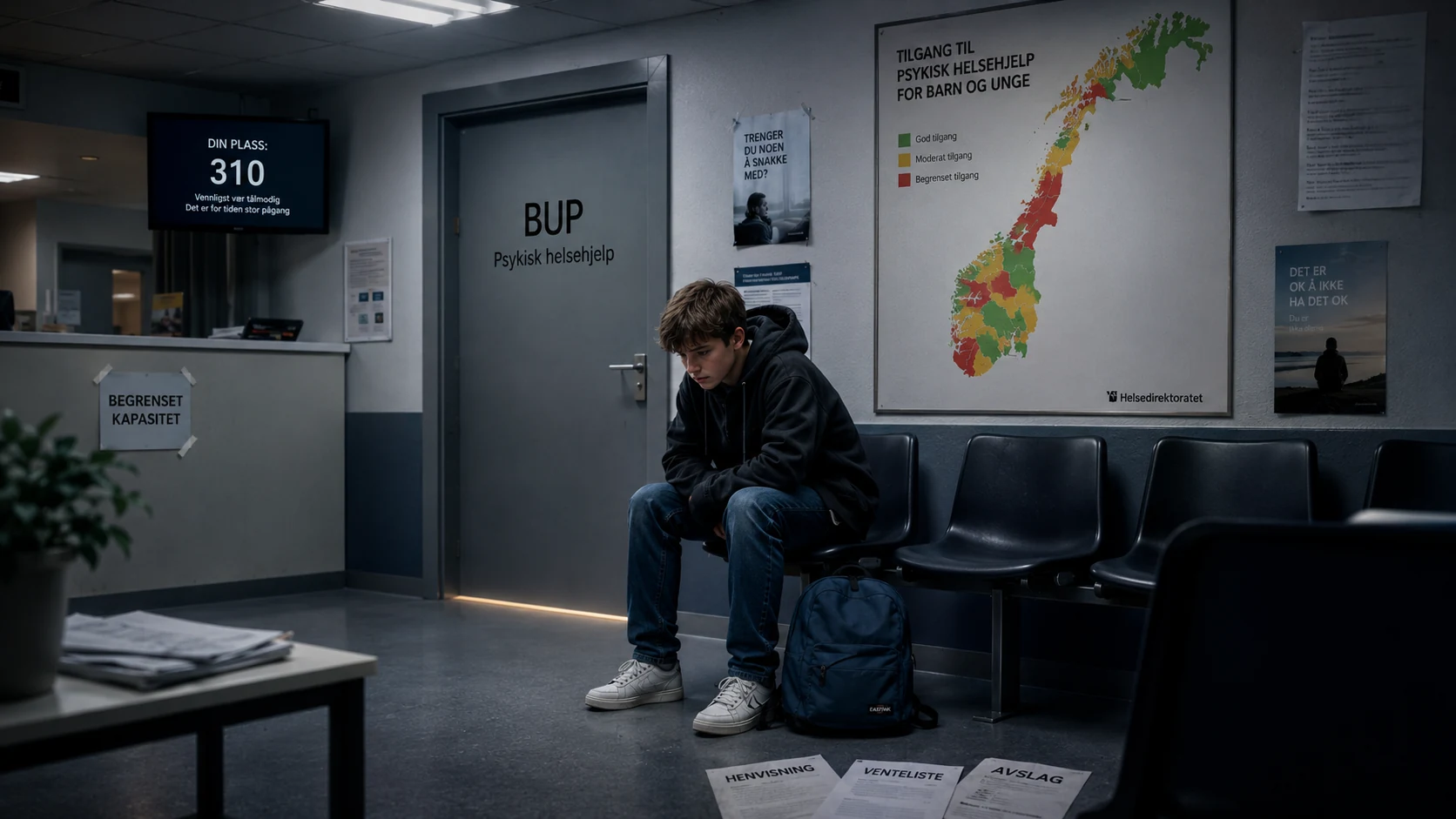
Barna staten lar vente
Riksrevisjonen viser et helsemonopol som samler makten, pengene og ansvaret, før psykisk syke barn likevel blir sittende fast i ventetid, bostedsflaks og offentlig tåke.
Les artikkelen ↗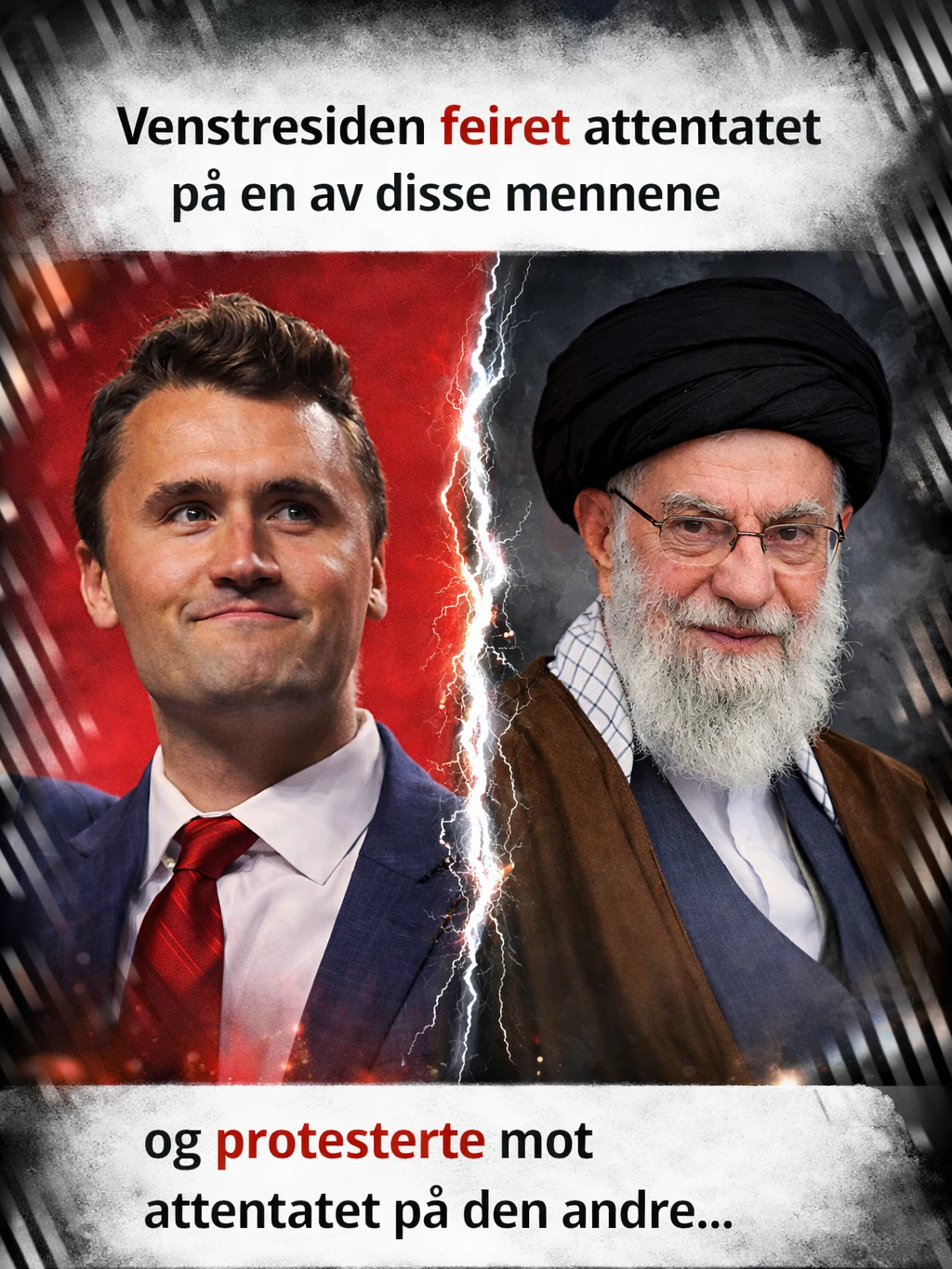
Venstresidens dypdykk i hykleri og den moralske katastrofen av tribalisme og selvbedrag
Når vold rammer fienden, finnes det alltid en forklaring. Når den rammer en alliert, oppdages plutselig prinsippene.
Les artikkelen ↗
Pathocracy – når de verste menneskene tar kontroll over samfunnet
Hvorfor venstrevridde ideer systematisk løfter de verste til makt
Les artikkelen ↗